
Historic Towns
Stari Bar, Montenegro: Old Town Ruins, Fortress & Visiting Tips
Table of Contents
Stari Bar is not the seafront promenade of modern Bar. It is a historic, partly ruined town set against the mountains inland from the Adriatic, where stone gates, fragmented churches and narrow passages tell a much longer story than a typical beach excursion. The reward is not one spectacular monument but the experience of walking through the layers of an old settlement at your own pace.
If you are based in Bar, Ulcinj or elsewhere on the southern coast, Stari Bar is an excellent cultural stop. This guide explains what you can realistically see, how to combine the ruins with the surrounding neighbourhood and which practical details to verify before you leave.
Stari Bar and modern Bar: know the difference
The names are easy to confuse. Modern Bar is a coastal city with a port, railway connections and everyday services. Stari Bar, literally Old Bar, stands uphill and inland. You can stay by the sea and make a separate excursion to the old settlement without changing accommodation.
Montenegro's cultural-heritage authority describes the old town as a nationally significant protected cultural property, covering about 4.5 hectares and containing the remains of hundreds of numbered structures. Its inland position is part of the story: the site was shaped by defensible terrain, nearby water and routes between the coast and the interior.
For a first visit, plan a half day rather than treating it as a five-minute roadside photograph. The ruins deserve time, and the streets below the entrance add a different atmosphere.
A layered town, not a single fortress
Stari Bar's architecture reflects centuries of change. Rather than expecting one intact medieval castle, look for the relationship between defensive walls, religious buildings, residential remains and infrastructure. Different periods and communities have left traces in the same compact place.
The site is also an active conservation landscape. Montenegro's heritage administration reported archaeological investigations at the Prince's Palace in 2025, illustrating why access to particular areas may change. Follow current signs and barriers even when an opening looks tempting.
What to see inside the old town
The gates and defensive walls. Begin by noticing how the approach controls access to the historic core. From different positions, the masonry frames views of the surrounding hills and modern Bar in the distance. Some paths are uneven; look at your footing before looking through the camera.
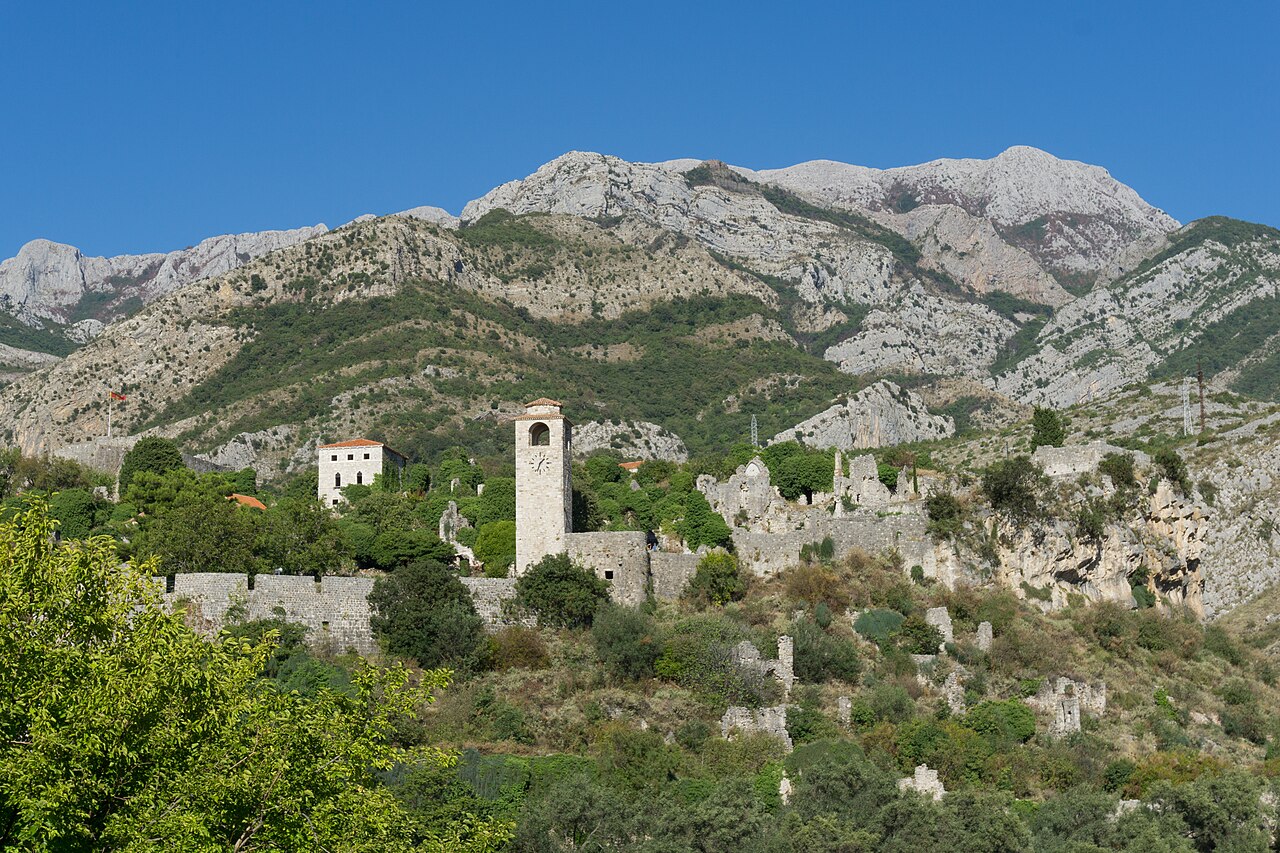
The clock tower and surviving streets. The tower is one of the most recognisable elements in the Stari Bar skyline. Walk slowly through the passages rather than racing directly to it: changes in stonework and the outline of former buildings make the place interesting.
Ruined churches and historic religious heritage. The remains of churches, including Saint Catherine's, show how much of the old town survives as architectural fragments. Restoration and interpretation are ongoing. Respect closed areas and avoid climbing on historic masonry.
The citadel and elevated viewpoints. Higher points reveal why this location was useful for defence and why the mountains are such a powerful part of the scenery. Not every viewpoint is necessarily accessible every day; follow the official route and any site notices.
The aqueduct. On the northern side of Old Bar, the historic aqueduct recalls the practical problem of supplying a fortified settlement with water. The local tourism organisation identifies its Ottoman-period construction and distinctive series of arches. It is worth understanding its role even if your view is from outside the archaeological core.
A realistic half-day itinerary
First hour: arrive and get oriented. Leave the car only where parking is permitted, then approach the old-town entrance on foot. Before buying a ticket, check which sections are open and whether any restoration work affects the normal circuit. Take a few minutes to understand the layout instead of heading straight for the first photo spot.
Next 60–90 minutes: explore the ruins. Walk the marked route through the walls, tower area and surviving structures. Allow extra time for uneven ground, photography and short rests. This is a place to notice details rather than to tick off a rigid list of buildings.
Final hour: the neighbourhood below. Descend to the lanes and small businesses around the approach to the fortress. A coffee or local meal makes a natural break before returning to modern Bar. If you have more time, consider the Old Olive Tree at Mirovica as a separate stop; do not assume that the same ticket covers both attractions.
A shorter visit is possible, but a rushed itinerary misses the contrast between the protected ruins and the living settlement below.
How to get to Stari Bar
From modern Bar. Stari Bar is a short inland trip, but it is not the same place as the coastal centre. A taxi or car is generally the simplest option when time is limited. Ask the driver to confirm the destination as the *Stari Bar old town entrance*, not simply 'Bar'.
By local transport. Local services may connect the town and the historic district, but frequencies and stopping points can change. Check with the local bus station or your accommodation on the day rather than relying on an old timetable.
From Ulcinj or Budva. Allow time for the coast road and seasonal traffic. Stari Bar works better as part of a southern-coast day than as an add-on to an already packed Kotor itinerary.
Parking and access. Parking arrangements near the lower approach may vary. Follow signs and avoid obstructing residents' access. The historic core is explored on foot; it is not a drive-through attraction.
Tickets, opening hours and accessibility
Treat prices and opening times as changeable, especially outside summer or during conservation work. Confirm them with the site operator or locally at the entrance. The lower streets and cafés should not be confused with admission to the protected archaeological area.
Expect steps, sloping approaches, old stone and irregular surfaces. Comfortable shoes with grip are more useful than beach sandals. Visitors with limited mobility should verify accessible sections before travelling; do not assume that every ruin or viewpoint is wheelchair accessible. In strong sun, carry drinking water and plan pauses in the shade.
When to visit and how to photograph it
Morning and later afternoon often offer more comfortable light than the harsh middle of a summer day. In the cooler months, the walking temperature may be pleasant, but daylight is shorter and services can be less frequent. After rain, smooth stone and exposed ground can become slippery.
The classic photograph places the old tower and stone structures against the mountain backdrop. For a more distinctive composition, use doorways and ruined arches as frames, but remain on authorised paths. Avoid entering unsafe buildings for a shot.
Combine Stari Bar with the southern coast
A sensible day could start in modern Bar, continue to Stari Bar for the historic walk and finish with a slower stop by the coast. If you want another heritage-focused stop, the protected Old Olive Tree at Mirovica is nearby, though visiting conditions should be confirmed separately.
Travellers staying longer can pair this area with Ulcinj on another day rather than trying to combine every southern destination into a single afternoon. The best route is the one that leaves room for the place itself.
For broader planning, compare our Montenegro seven-day itinerary and driving guide. Both help you decide whether the southern coast belongs in your trip.
Common mistakes to avoid
- •Confusing the historic ruins with modern Bar's waterfront.
- •Assuming all paths are smooth, level or stroller-friendly.
- •Relying on old ticket prices or summer opening hours.
- •Photographing from unsafe walls or entering restricted conservation areas.
- •Scheduling the visit between two long drives without enough time to walk.
FAQ
Is Stari Bar worth visiting? Yes, particularly if you enjoy history, architecture and places that are best explored slowly. It offers a different experience from the beaches and promenade of modern Bar.
How long do I need? Set aside around two to three hours for the old town and its immediate surroundings, more if you want a relaxed meal or another nearby stop.
Is Stari Bar the same as Bar? No. Bar is the modern coastal city; Stari Bar is the historic settlement inland and uphill.
Can I visit with children? Families can enjoy the site, but supervise children closely around steps, loose stones and exposed edges. Strollers may be difficult on the uneven paths.
Can I rely on the ticket price I found online? No. Check the current price and opening conditions directly with the operator or at the entrance before planning around them.
Sources and photo credits
For heritage status and conservation, consult the Montenegro cultural-heritage authority and its archaeological update. The Bar tourism organisation's aqueduct page explains the historic water supply.
Photograph: Michal Klajban, “A castle in Stari Bar”, CC BY-SA 4.0. Source: Wikimedia Commons; the cover uses a cropped display of the original photograph.