History guide · 2026
A short, clear history of Montenegro
Few small countries have a history as dense as Montenegro's — a thousand years of resistance to bigger powers, a unique theocratic monarchy, two Yugoslavias, one of Europe's most recent independence referendums and a candidate-country path to the EU. Here is the timeline that explains the country you see today.
Medieval origins: Duklja and Zeta (9th–15th c.)
The first state on Montenegrin soil was Duklja, a Slavic kingdom that emerged around the 9th century in modern coastal Montenegro and Albania. It became the Kingdom of Zeta under the Vojislavljević and later Balšić families, with capitals shifting between Bar, Skadar and the Skadar Lake area. By the late 15th century the Ottomans had absorbed most of the lowlands; only the highland Crnojević principality, based around Cetinje, kept a measure of independence.
The Prince-Bishops: Petrović-Njegoš (1697–1851)
A theocratic monarchy emerged in 1697: the vladika (prince-bishop) of Cetinje, drawn from the Petrović-Njegoš family, was both spiritual and political ruler. The most famous, Petar II Petrović-Njegoš, was poet, philosopher and bishop in one person; his epic "Mountain Wreath" is the foundational text of Montenegrin culture. The line ended in 1851 when Danilo I became a secular prince.
Kingdom of Montenegro (1910–1918)
Montenegro fought multiple wars against the Ottomans and slowly expanded southward. In 1910, Prince Nikola I proclaimed the Kingdom of Montenegro. The country fought on the Allied side in World War I, was occupied by Austria-Hungary in 1916, and at the end of the war was controversially merged into the new Kingdom of Serbs, Croats and Slovenes — the contested 1918 Podgorica Assembly is still debated by historians today.
Two Yugoslavias (1918–2003)
Montenegro spent the 20th century inside two Yugoslav states: the inter-war Kingdom of Yugoslavia, then socialist Yugoslavia under Tito (1945–1992), where it was one of six republics. After the violent breakups of the 1990s, Montenegro remained federated with Serbia in the smaller "Federal Republic of Yugoslavia", later renamed Serbia and Montenegro in 2003.
Independence and the EU path (2006–today)
On 21 May 2006, Montenegro held a referendum: 55.5% voted for independence, just above the 55% threshold set by the EU. Independence was proclaimed on 3 June 2006. Since then Montenegro has joined NATO (2017), unilaterally used the Euro since 2002, and remains an EU candidate country with accession negotiations among the most advanced in the Western Balkans.
Why this matters for travelers
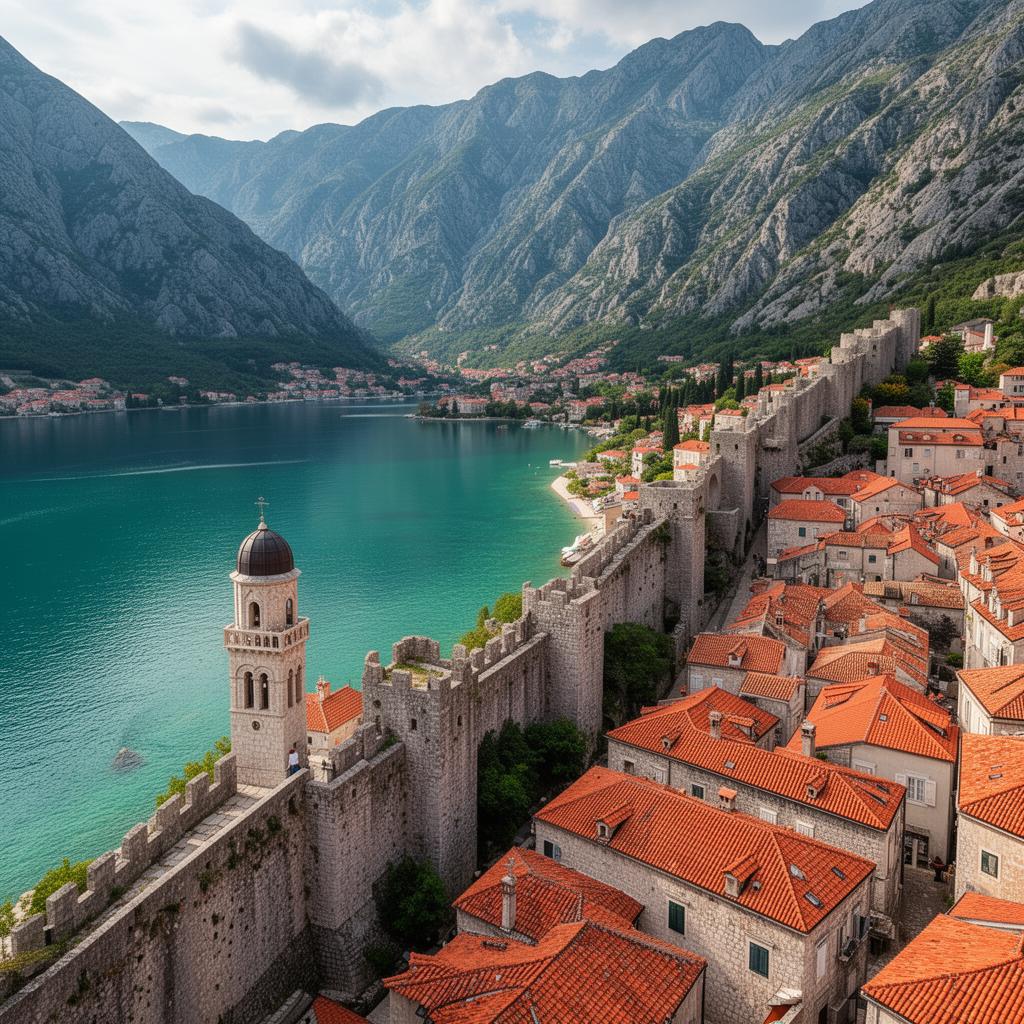
You will see this history etched into the country: the Petrović-Njegoš mausoleum on Mount Lovćen, the medieval walls of Kotor and Bar, the Old Royal Capital of Cetinje with its museums and monastery, the Ottoman-era old town of Ulcinj, and the Tito-era monuments scattered across the north. Spending an afternoon in Cetinje is the single best primer on what Montenegro actually is.
Frequently asked questions
When did Montenegro become independent?
Modern Montenegro declared independence on 3 June 2006 after a referendum on 21 May 2006 in which 55.5% voted yes. The country had previously been independent as the Kingdom of Montenegro from 1910 to 1918.
Was Montenegro part of Yugoslavia?
Yes, twice. It was part of the Kingdom of Yugoslavia (1918–1941) and then socialist Yugoslavia (1945–1992), where it was one of six federal republics. After Yugoslavia broke up, it remained federated with Serbia until 2006.
What is the historical capital of Montenegro?
Cetinje is the historical and "Old Royal Capital". Modern administrative capital is Podgorica, but the Parliament still meets occasionally in Cetinje, where the presidential residence and several key cultural institutions remain.
Is Montenegro in the European Union?
Not yet. Montenegro is an EU candidate country and has been negotiating accession since 2012. It uses the Euro unilaterally since 2002 and joined NATO in 2017.